Herb record · Passifloraceae
Passionflower tea: what the evidence says
Reviewed
One of the few herbs tested as a tea against a placebo tea, with a small positive result for sleep quality. It should not be used in pregnancy.
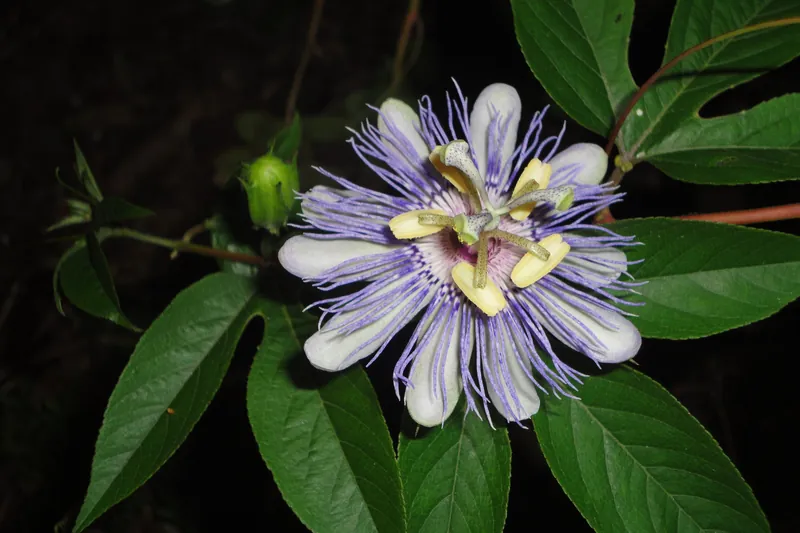

At a glance
- Latin name
- Passiflora incarnata
- Evidence
- Tested as tea At least one controlled human trial gave this herb as a tea.
- EU tea amount
- 1–2 g in 150 ml boiling water, 1–4 times daily. For mild symptoms of mental stress and to aid sleep (traditional use).
- Cautions
- Avoid in pregnancySedating: avoid with alcohol or sedatives
- In our index
- 10 teas
What did the studies actually test?
Each row says what form was given. Results from extracts or capsules don't automatically apply to a cup of tea, which usually contains a smaller and less standardized amount.
| Question | Form tested | What was found |
|---|---|---|
| Sleep | tea | In 41 healthy young adults, a week of nightly passionflower tea gave better diary-rated sleep quality than a placebo tea. Five other sleep-diary measures were not reported as different. (Ngan & Conduit, 2011) |
| Sleep | extract | In 110 adults with insomnia disorder, two weeks of extract increased total sleep time measured in a sleep lab compared with placebo. (Lee et al., 2020) |
| Anxiety | extract | Most of nine trials reviewed in 2020 reported less anxiety; a small pilot found an extract performed similarly to the drug oxazepam (no placebo group). NCCIH calls the evidence a small amount of research. (Janda et al., 2020)(Akhondzadeh et al., 2001)(NCCIH fact sheet) |
| Anxiety | tea | In 210 surgical patients, a chamomile–passionflower–anise tea did not lower anxiety versus placebo tea. (Zampieri et al., 2025) |
How much passionflower goes in a cup?
The European Medicines Agency's herbal committee lists 1–2 g of dried passionflower in 150 ml boiling water, 1–4 times daily, for mild symptoms of mental stress and to aid sleep (traditional use). (EU herbal monograph)
These figures come from long-standing use, not from trials proving a dose works. Most tea boxes in our index don't say how much passionflower is in each bag, so you usually can't compare a bag with this amount.
Who should be careful with passionflower?
- Avoid in pregnancy. Should not be used during pregnancy, as it may induce uterine contractions. (NCCIH fact sheet)
- Sedating: avoid with alcohol or sedatives. Can cause drowsiness, dizziness and confusion; may interact with anesthesia. Tell your clinician if you use it within 2 weeks of surgery. (NCCIH fact sheet)
This list repeats what the cited sources say; it isn't a complete interaction check. A pharmacist can check your specific medicines.
Which calming teas contain passionflower?
-
Bigelow Sleep Chamomile & Lavender
Chamomile, Lavender, Passionflower
-
Bigelow Stress Free Rose & Mint
Chamomile, Passionflower, Licorice root
-
Buddha Teas Calm Buddha Blend
Chamomile, Lavender, Passionflower, St John's wort
-
Buddha Teas Passion Flower
Passionflower
-
Numi De-Stress
Lemon balm, Passionflower, Licorice root
-
The Republic of Tea Rest
Chamomile, Lemon balm, Lavender, Passionflower, Licorice root
-
Traditional Medicinals Cup of Calm
Chamomile, Lavender, Passionflower, Licorice root
-
Traditional Medicinals Nighty Night
Chamomile, Passionflower, Linden flower, Hops
-
Traditional Medicinals Nighty Night Extra
Lemon balm, Passionflower, Valerian root, Licorice root
-
Yogi Bedtime
Chamomile, Passionflower, Valerian root
Sources
- Ngan & Conduit (2011). A double-blind, placebo-controlled investigation of the effects of Passiflora incarnata (passionflower) herbal tea on subjective sleep quality. Phytother Res.
Human trial (randomized, double-blind, placebo tea, crossover) · form: tea
41 healthy adults aged 18–35 drank one cup of passionflower tea or a placebo tea nightly for a week each. Diary-rated sleep quality was better with passionflower; the other five diary measures were not reported as different.
Limits: Healthy young adults with mild sleep fluctuations; one week per arm; subjective outcome.
checked against the abstract, 2026-10-21 · PMID 21294203 - Lee et al. (2020). Effects of Passiflora incarnata Linnaeus on polysomnographic sleep parameters in subjects with insomnia disorder: a double-blind randomized placebo-controlled study. Int Clin Psychopharmacol.
Human trial (randomized, double-blind, placebo) · form: extract
110 adults with insomnia disorder took passionflower extract or placebo for 2 weeks. Total sleep time on polysomnography increased more with passionflower; sleep efficiency and wake time improved within the group but not versus placebo.
Limits: Extract, not tea. Two weeks only.
checked against the abstract, 2026-10-21 · PMID 31714321 - Janda et al. (2020). Passiflora incarnata in Neuropsychiatric Disorders-A Systematic Review. Nutrients.
Systematic review · form: mixed
Nine clinical trials of passionflower preparations in neuropsychiatric conditions. Most reported reduced anxiety; no memory or psychomotor side effects were observed.
Limits: Trials varied from one day to 30 days and used different scales; effect was less evident in mild anxiety.
checked against the abstract, 2026-10-21 · PMID 33352740 - Akhondzadeh et al. (2001). Passionflower in the treatment of generalized anxiety: a pilot double-blind randomized controlled trial with oxazepam. J Clin Pharm Ther.
Human trial (randomized, double-blind, active control) · form: extract
36 outpatients with generalized anxiety disorder took passionflower extract drops or oxazepam for 4 weeks. Both groups improved with no significant difference between them.
Limits: Pilot study, no placebo arm, extract drops.
checked against the abstract, 2026-10-21 · PMID 11679026 - NCCIH (NIH). Passionflower, updated April 2025.
Government fact sheet
Small amount of research suggests oral passionflower might reduce anxiety and might improve total sleep time in insomnia. May be safe as a tea for up to 7 nights. Side effects include drowsiness, dizziness, confusion. May interact with anesthesia; should not be used during pregnancy.
checked against the official page, 2026-10-21 - Zampieri et al. (2025). Exploring the Effects of a Calming Herbal Tea Blend on Perioperative Anxiety: A Randomized Clinical Trial. J Med Food.
Human trial (randomized, double-blind, placebo tea) · form: tea
210 surgical patients in Brazil drank a chamomile–passionflower–anise tea or a lemon placebo tea. Anxiety scores did not differ between groups; the herbal-tea group reported more positive feelings about the procedure.
Limits: Single centre; anxiety measured after surgery. A rare trial with a placebo tea, and it found no anxiety difference.
checked against the abstract, 2026-10-21 · PMID 39514279 - European Medicines Agency, HMPC. Community herbal monograph on Passiflora incarnata L., herba (EMA/HMPC/669740/2013).
Regulatory monograph
Traditional use for mild symptoms of mental stress and to aid sleep. Tea: 1–2 g in 150 ml boiling water, 1–4 times daily; adolescents and adults. Not recommended under 12 or in pregnancy/lactation for lack of data.
checked against the official document, 2026-10-21