Herb record · Caprifoliaceae
Valerian root tea: what the evidence says
Reviewed
The classic 'sleep herb', with the most trials and the least consistent results. Recent reviews find no reliable benefit for insomnia, and we found no trial of valerian tea itself.
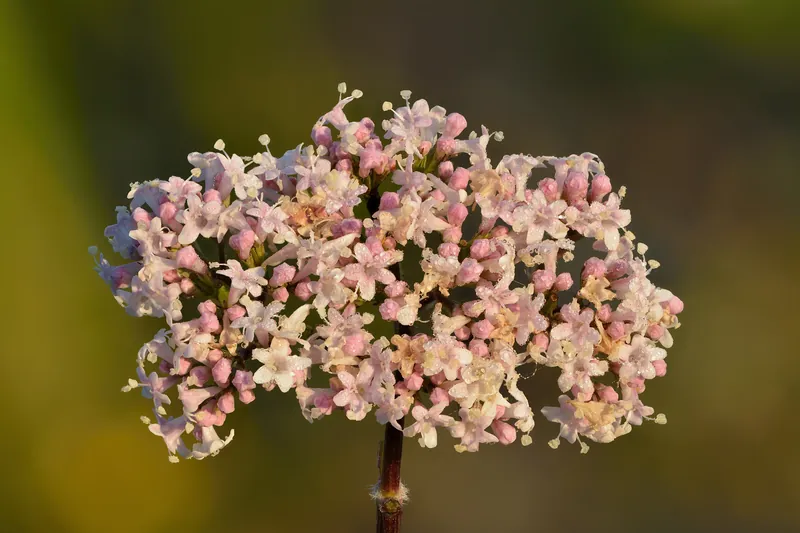

At a glance
- Latin name
- Valeriana officinalis
- Evidence
- Mixed results Many trials, inconsistent results; recent reviews are not convincing.
- EU tea amount
- 0.3–3 g in 150 ml boiling water, half to one hour before bed (an earlier evening dose if needed); up to 3 times daily for stress. For mild symptoms of mental stress and to aid sleep (traditional use).
- Cautions
- Sedating: avoid with alcohol or sedativesVery rare liver reportsPregnancy safety not established
- In our index
- 4 teas
What did the studies actually test?
Each row says what form was given. Results from extracts or capsules don't automatically apply to a cup of tea, which usually contains a smaller and less standardized amount.
| Question | Form tested | What was found |
|---|---|---|
| Insomnia | mixed | Umbrella reviews from 2023 and 2024 found no evidence that valerian works for insomnia disorder. A 2015 meta-analysis found no herbal product beat placebo, and valerian had more side effects per person than placebo. (Valente et al., 2024)(Ell et al., 2023)(Leach & Page, 2015) |
| Sleep quality | mixed | Earlier and more optimistic reviews report better subjective sleep quality, but flag poor study quality, varied preparations and possible publication bias. (Bent et al., 2006)(Shinjyo et al., 2020) |
| Guidelines | — | According to NCCIH, the American Academy of Sleep Medicine recommended against valerian for chronic insomnia in adults (2017). (NCCIH fact sheet) |
| Tea form | tea | Our PubMed search (21 Oct 2026) found no controlled trial of valerian tea for sleep. |
How much valerian root goes in a cup?
The European Medicines Agency's herbal committee lists 0.3–3 g of dried valerian root in 150 ml boiling water, half to one hour before bed (an earlier evening dose if needed); up to 3 times daily for stress, for mild symptoms of mental stress and to aid sleep (traditional use). (EU herbal monograph)
These figures come from long-standing use, not from trials proving a dose works. Most tea boxes in our index don't say how much valerian root is in each bag, so you usually can't compare a bag with this amount.
Who should be careful with valerian root?
- Sedating: avoid with alcohol or sedatives. Don't combine with alcohol or sedatives. Side effects include headache, stomach upset, mental dullness and vivid dreams. (NCCIH fact sheet)
- Very rare liver reports. Liver injury has been reported in very rare cases, mostly when combined with other herbs. (NCCIH fact sheet)
- Pregnancy safety not established. Little is known about safety in pregnancy or breastfeeding. (NCCIH fact sheet)
This list repeats what the cited sources say; it isn't a complete interaction check. A pharmacist can check your specific medicines.
Which calming teas contain valerian root?
-
Buddha Teas Valerian Root
Valerian root
-
Celestial Seasonings Sleepytime Extra
Chamomile, Valerian root, Linden flower
-
Traditional Medicinals Nighty Night Extra
Lemon balm, Passionflower, Valerian root, Licorice root
-
Yogi Bedtime
Chamomile, Passionflower, Valerian root
Sources
- Valente et al. (2024). Does valerian work for insomnia? An umbrella review of the evidence. Eur Neuropsychopharmacol.
Umbrella review · form: mixed
Eight systematic reviews of valerian. Good safety profile, but no evidence of efficacy for treating insomnia; some subjective sleep-quality improvement not confirmed by objective measures.
Limits: Underlying trials scarce, heterogeneous and of low methodological quality.
checked against the abstract, 2026-10-21 · PMID 38359657 - Ell et al. (2023). Complementary and alternative treatments for insomnia disorder: a systematic umbrella review. J Sleep Res.
Umbrella review · form: mixed
Systematic reviews of alternative insomnia treatments. Valerian (and light exposure) did not significantly improve outcomes in adults with insomnia disorder.
Limits: Focus on diagnosed insomnia disorder, not occasional poor sleep.
checked against the abstract, 2026-10-21 · PMID 37527850 - Leach & Page (2015). Herbal medicine for insomnia: A systematic review and meta-analysis. Sleep Med Rev.
Systematic review + meta-analysis · form: mixed
14 randomized trials (1,602 people with insomnia) of valerian, chamomile, kava and wuling. No herbal medicine differed from placebo on any of 13 efficacy measures. Valerian had more adverse events per person than placebo.
Limits: Published 2015; preparations were mostly not teas.
checked against the abstract, 2026-10-21 · PMID 25644982 - Bent et al. (2006). Valerian for sleep: a systematic review and meta-analysis. Am J Med.
Systematic review + meta-analysis · form: mixed
16 randomized placebo-controlled studies (1,093 patients). Six studies with a yes/no sleep-quality outcome showed benefit (relative risk 1.8).
Limits: Most studies had significant methodological problems; doses and preparations varied; evidence of publication bias.
checked against the abstract, 2026-10-21 · PMID 17145239 - Shinjyo et al. (2020). Valerian Root in Treating Sleep Problems and Associated Disorders-A Systematic Review and Meta-Analysis. J Evid Based Integr Med.
Systematic review + meta-analysis · form: mixed
60 studies. Pooled analyses suggested valerian improved subjective sleep quality and anxiety; the authors attribute inconsistent results to variable extract quality and suggest whole root may be more reliable.
Limits: The whole-root suggestion is the authors' interpretation, not a tested comparison. Conclusions are more positive than other reviews.
checked against the abstract, 2026-10-21 · PMID 33086877 - NCCIH (NIH). Valerian, updated May 2025.
Government fact sheet
Evidence for sleep is inconsistent; the American Academy of Sleep Medicine (2017) recommended against valerian for chronic insomnia. Generally safe short-term for most adults; side effects include headache, stomach upset and vivid dreams; very rare liver injury, mostly with other herbs. Should not be combined with alcohol or sedatives. Little is known about pregnancy and breastfeeding.
checked against the official page, 2026-10-21 - European Medicines Agency, HMPC. European Union herbal monograph on Valeriana officinalis L., radix (EMA/HMPC/150848/2015).
Regulatory monograph
Traditional use for mild symptoms of mental stress and to aid sleep. Tea: 0.3–3 g in 150 ml boiling water; for sleep, half to one hour before bedtime (optionally an earlier dose in the evening); for stress up to 3 times daily. Not recommended under 12 or in pregnancy/lactation for lack of data.
checked against the official document, 2026-10-21